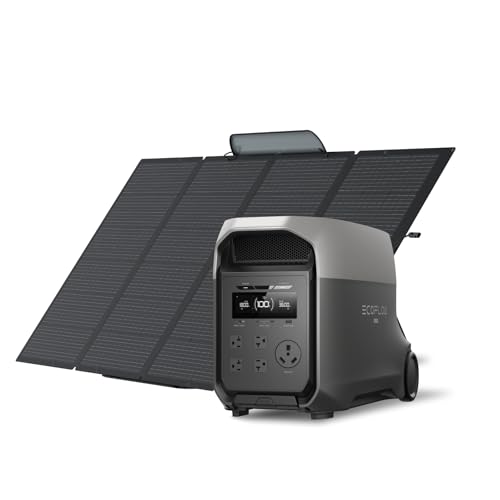

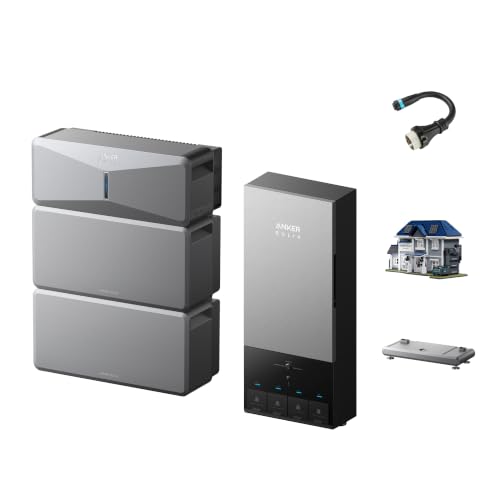
Imagine a storm knocks out your power for days. Your fridge goes silent, the Wi-Fi dies, and you are left scrambling for a generator. This scenario is all too common, and choosing the right backup system can mean the difference between a minor inconvenience and a major headache. In this guide, we compare two powerhouse contenders for whole-home backup: the Anker SOLIX E10 and the EcoFlow DELTA Pro Ultra. We will break down their core features, scalability, and real-world usability to help you decide which system fits your home and lifestyle in 2026. For a broader look at top options, check out our guide to the best home battery backup power supplies.







Buying Guide
Capacity and Scalability
Your backup needs depend on how much power you require and for how long. The Anker SOLIX E10 starts with 12kWh and can expand to 90kWh, making it a strong choice for whole-home coverage. The EcoFlow DELTA Pro Ultra X offers 12kWh base capacity and scales up to 180kWh, giving you even more room for growth. Both systems use modular battery packs, so you can add capacity as your needs evolve.
Consider your home’s typical energy consumption. If you only need to power essentials like lights and a fridge, a smaller setup may suffice. For running an entire home including an HVAC system or EV charger, higher capacity is essential. For more on sizing, see our best whole home battery backup without solar guide.
Power Output and Whole-Home Coverage
Output determines which appliances you can run simultaneously. The Anker SOLIX E10 delivers 7.6kW continuous (scalable to 22.8kW) with a 10kW turbo output, and its Power Dock supports 200A whole-home coverage. The EcoFlow DELTA Pro Ultra X offers 12kW to 36kW output, also capable of powering an entire home. Both systems provide automatic switchover in under 20 milliseconds, ensuring seamless backup during outages.
If you have high-demand appliances like a central AC or well pump, verify the system’s surge capacity. The E10’s turbo output can handle brief spikes, while the Ultra X’s higher continuous output may be better for sustained heavy loads. Both systems are designed for professional installation and can replace a traditional generator.
Installation and Setup
Ease of installation is a key factor for many homeowners. The Anker SOLIX E10 is designed for quick setup: stack the battery packs, plug them in, and you are ready to go. It can be wall or floor mounted and is weatherproof (NEMA 4 and 3R rated) for outdoor use without additional shelter. The EcoFlow DELTA Pro Ultra X also offers plug-and-play installation with no hardwiring required, and it can be unplugged and moved if you relocate.
Both systems support professional installation for those who prefer a hands-off approach. The E10 includes a 5-year warranty on the power module and a 10-year warranty on the dock, while the Ultra X comes with a 5-year warranty. Consider your comfort level with DIY projects and whether you want a system that can be easily expanded or relocated.
Battery Chemistry and Lifespan
Both the Anker SOLIX E10 and EcoFlow DELTA Pro Ultra use LiFePO4 (LFP) battery chemistry, known for its safety and long cycle life. The E10 is rated for a 10-year lifespan with EV-class LFP cells, while the Ultra X features automotive-grade LFP cells with a dual BMS and 100+ safety checks. The Anker SOLIX S2000, a smaller portable unit, boasts 10,000 charge cycles, indicating the brand’s commitment to longevity.
LFP batteries are safer than older lithium-ion chemistries, with lower risk of thermal runaway. They also handle partial charging better, making them ideal for daily use. If you plan to use your backup system frequently for energy savings (e.g., time-of-use shifting), a long-lasting battery is crucial. Both systems are built to last, but the E10’s 10-year lifespan and the Ultra X’s robust safety features give you peace of mind.
Final Thoughts
Choosing between the Anker SOLIX E10 and the EcoFlow DELTA Pro Ultra comes down to your specific needs. If you want a system that is easy to install, weatherproof for outdoor placement, and offers solid whole-home coverage with a 10-year lifespan, the Anker SOLIX E10, Power Dock and Extra Battery is a compelling choice. On the other hand, if you need maximum scalability up to 180kWh, higher continuous output, and the flexibility to unplug and move your system, the EF ECOFLOW Power Station 12288Wh Delta Pro Ultra X delivers unmatched versatility. Both are top-tier solutions that will keep your home powered through any outage in 2026.
Frequently Asked Questions
Can the Anker SOLIX E10 power my entire house? Yes, the E10 with its Power Dock supports 200A whole-home coverage, meaning it can power every circuit in a typical home. It provides 7.6kW continuous output, scalable to 22.8kW, and has a 10kW turbo output for starting high-demand appliances.
How long does the EcoFlow DELTA Pro Ultra take to switch to battery power? The DELTA Pro Ultra X switches to battery power in under 20 milliseconds, which is faster than a blink. This ensures your sensitive electronics like computers and medical devices stay on without interruption.
Is the Anker SOLIX E10 weatherproof for outdoor use? Yes, the E10 power module is NEMA 4 rated, and the Power Dock is NEMA 3R rated. This means the system can be installed outdoors without additional shelter, even in rain or snow, and operates in temperatures from -4°F to 131°F.
Can I expand the capacity of the EcoFlow DELTA Pro Ultra X? Absolutely. The DELTA Pro Ultra X starts with 12kWh and can be expanded up to 180kWh using additional smart extra batteries. The extra batteries are plug-and-play, so you can add capacity without tools or an electrician. For more on portable options, see our portable power stations category.