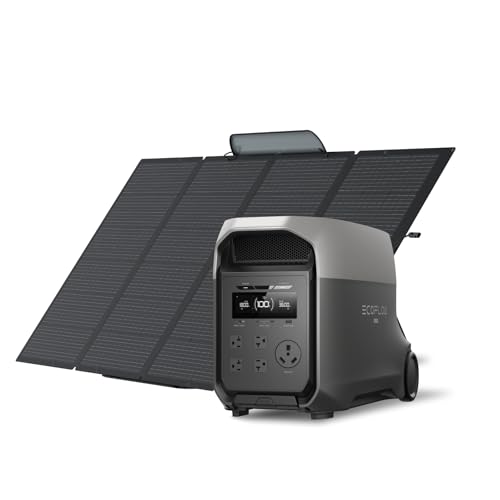

When the lights flicker during a storm, or you plan a long off-grid adventure, having a reliable home backup battery is a game changer. Two heavyweights dominate the market: the Anker SOLIX F3800 Plus and the EcoFlow Delta Pro 3. Both promise massive capacity, fast solar recharging, and whole-home power. But which one truly fits your lifestyle? In this guide, we break down their key differences, explore other top contenders, and help you decide based on your specific needs.
We’ve spent hours analyzing specs, user feedback, and real-world performance to bring you this clear comparison. Whether you’re prepping for emergencies, living in an RV, or just want backup for your fridge and medical devices, we’ve got you covered. For a deeper dive into the F3800 Plus, check out our anker SOLIX F3800 plus review.


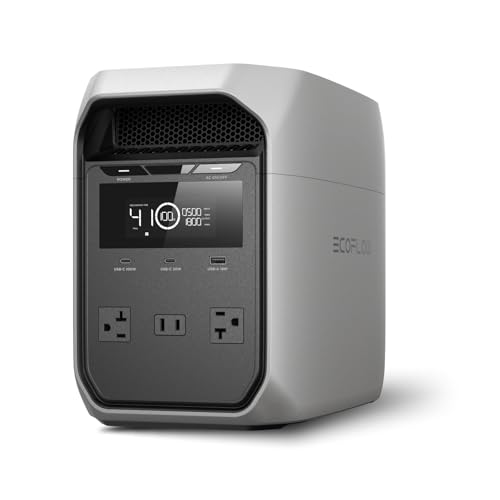



Buying Guide: What to Look For in a Home Backup Battery
Choosing the right home backup battery isn’t just about raw watt-hours. You need to consider output power, expandability, recharge speed, and how it integrates with your daily life. Let’s break down the key criteria to help you make an informed choice.
Power Output: Can It Run Your Heavy Appliances?
The continuous AC output determines what you can plug in. The Anker SOLIX F3800 delivers a massive 6000W, easily running a central AC, electric dryer, or even a car charger. The EcoFlow Delta Pro 3 offers 4000W continuous (6000W with X-Boost), which covers most essentials but may struggle with larger appliances simultaneously. If you have heavy-duty needs, the F3800’s extra headroom is a big win.
Both support 120V/240V split-phase, so you can power standard household circuits. For most homes, 4000W is plenty, but for whole-home backup, the F3800’s 6000W is more reassuring. Think about your typical load: fridge, lights, router, maybe a microwave. The Delta Pro 3 handles that easily, while the F3800 gives you room to add more.
Expandability: How Much Capacity Do You Really Need?
Battery capacity is your energy reservoir. The F3800 starts at 3.84kWh and can expand to 26.9kWh with six BP3800 expansion batteries. The Delta Pro 3 starts at 4.096kWh and can scale to 48kWh with extra batteries and smart generators. If you anticipate multi-day outages, the Delta Pro 3’s higher ceiling is attractive. However, the F3800’s modular approach is simpler and often more cost-effective for average homes.
Also consider the expansion battery cost and compatibility. The Anker BP3800 is designed specifically for the F3800, while EcoFlow offers a range of extra batteries. For a balanced approach, check out our best whole home battery backup without solar guide for more options.
Recharge Speed: How Fast Can You Refill?
When the grid is down, you want to recharge quickly. The F3800 supports up to 6000W input, combining AC and solar for a full charge in under 2 hours. The Delta Pro 3 offers 7 charging methods, including AC, solar, EV, and generator, with a 0-80% charge in about 1 hour. Both are excellent, but the Delta Pro 3’s versatility gives you more flexibility in emergency situations.
Solar recharging is a key feature for off-grid use. The F3800 handles up to 3600W solar input, while the Delta Pro 3 supports up to 6000W with multiple panels. If you plan to rely on solar, the Delta Pro 3’s higher input means faster top-ups on sunny days.
Portability and Form Factor
These are heavy units, so consider where you’ll store them. The F3800 weighs around 130 lbs, while the Delta Pro 3 is lighter at about 115 lbs. Both have wheels and handles, but the Delta Pro 3 is slightly easier to move. If you plan to take it camping or to an RV, weight matters. For stationary home backup, it’s less critical.
Also check the physical dimensions. The F3800 is larger, requiring more floor space. The Delta Pro 3 has a more compact footprint, which might fit better in tight closets or under counters. For RV living, the Delta Pro 3’s lower profile is a plus. Explore our best home battery backup power supply for more compact alternatives.
Final Thoughts
Choosing between the Anker SOLIX F3800 Portable Power Station, 3840Wh and the EF ECOFLOW DELTA Pro 3 Portable Power Station comes down to your power appetite. If you need to run heavy appliances like a central AC or electric dryer, the F3800’s 6000W output is unbeatable. If you value faster recharge times and a higher expansion ceiling, the Delta Pro 3 takes the lead. Both are stellar choices for home backup, so pick the one that aligns with your specific needs and budget.
Frequently Asked Questions
Can the Anker SOLIX F3800 Plus power my whole house?
Yes, the F3800 Plus can power most essential appliances, but it’s not a full home backup system like a Tesla Powerwall. With 6000W output and expandable capacity up to 26.9kWh, it can run your fridge, lights, TV, and even a well pump during an outage. For whole-home coverage, you’d need multiple units or a dedicated transfer switch.
For a deeper look at whole-home options, see our anker SOLIX E10 review.
How long does the EcoFlow Delta Pro 3 take to charge from solar?
With 6000W solar input, the Delta Pro 3 can charge from 0 to 100% in about 2 hours under ideal sunlight. In real-world conditions, expect 4-6 hours with a typical 2000W solar array. It also supports AC and generator charging, so you’re never stuck.
Are these power stations safe to use indoors?
Yes, both the F3800 Plus and Delta Pro 3 use LiFePO4 batteries with advanced battery management systems. They produce no fumes, so indoor use is safe. However, always keep them on a hard, flat surface and avoid covering vents to prevent overheating.
What is the lifespan of these batteries?
LiFePO4 batteries are rated for 3,500+ cycles, which translates to roughly 10 years of daily use. Both brands offer a 5-year warranty, giving you peace of mind. For occasional backup use, these units can last even longer.