
You are parked off the grid, the sun is dropping, and your trailer battery is already below half. That is the moment most RV owners start searching for the best solar panel kits for RV trailers. This guide covers complete systems, starter kits, and trickle chargers so you can keep the fridge running and the lights on without hunting for a hookup.
We evaluated ten kits from Renogy, ECO-WORTHY, and SOLPERK, focusing on what actually matters for trailer life: usable daily output, controller quality, and how much wiring you have to do yourself. If you tow a caravan, our best caravan solar panel kit roundup is a useful companion read.





How We Chose the Best Solar Panel Kits for RV Trailers
We assessed each kit on real-world daily yield, controller type, battery compatibility, and installation effort. A 400W system that needs a degree in electrical work is less useful than a 200W kit you can mount and wire in an afternoon. Our broader solar panel kits category page explains the underlying technology if you want more depth.
Controller Type: MPPT vs. PWM
MPPT controllers harvest more power in low light and partial shade, which matters on tree-lined campsites. PWM controllers are simpler and cheaper but lose efficiency as panel voltage rises. For trailer use, we lean toward MPPT whenever the budget allows.
Total Daily Output and Battery Storage
Match the kit to your load. A trickle charger maintains a battery; a 200W starter kit runs lights and a fan; a 400W or 800W complete system can handle a fridge, microwave, or air conditioner. Storage capacity matters just as much, since lithium batteries let you draw deeper without damage.
If you are outfitting a larger rig, our best solar panel kit for motorhome guide covers higher-capacity options.
Installation Effort and Completeness
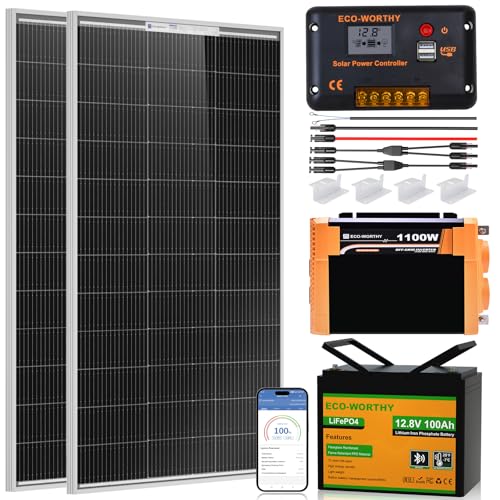
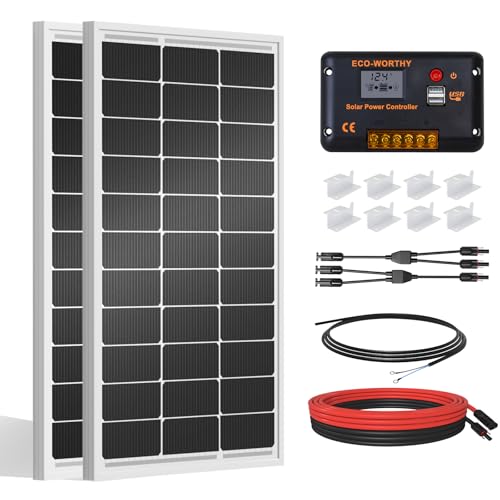
Complete kits include panels, controller, battery, inverter, and cables, so you are not chasing missing parts. Starter kits assume you already own a battery. Read the package list carefully, because “complete” means different things to different brands.
Durability and Weather Rating
Trailer panels face hail, snow load, and highway vibration. Look for tempered glass, corrosion-resistant aluminum frames, and IP65 or IP68 junction boxes. Those ratings separate panels that last a decade from ones that fail after two seasons.
Final Thoughts
For a turnkey setup that powers a full trailer, the [Ultra]ECO-WORTHY 12V 400W Complete Solar Panel is hard to beat, while the Renogy 200W 12V Monocrystalline Solar Panel Kit suits budget-conscious owners who already have a battery. Either way, you get reliable off-grid power without the guesswork.
Frequently Asked Questions
How many watts do I need for an RV trailer?
Most weekend trailers do fine with 200W to 400W of panels and a 100Ah lithium battery. Full-time travelers running a fridge and inverter often need 600W to 800W. Start by adding up your daily watt-hours, then size the array to replace them in four to five hours of sun.
Can I install a solar panel kit myself?
Yes. Complete kits like the ECO-WORTHY systems use color-coded, plug-and-play cables and a four- or five-step wiring sequence. Basic hand tools and a roof-safe mounting method are usually enough. If you are unsure about drilling into your roof, have a shop handle the mounting and do the wiring yourself.
Do I need an MPPT controller for my trailer?
Not strictly, but MPPT controllers typically deliver 20% to 30% more usable power in real conditions. On a shaded or angled trailer roof, that difference is noticeable. PWM is acceptable for small trickle-charge setups where cost is the priority.
What is the best solar panel kit for RV trailers in 2026?
For most owners, a complete 400W kit with lithium storage offers the best balance of power and simplicity. If you camp lightly, a 100W to 200W starter kit is enough. Browse our best solar panel kits for camping picks for portable alternatives.