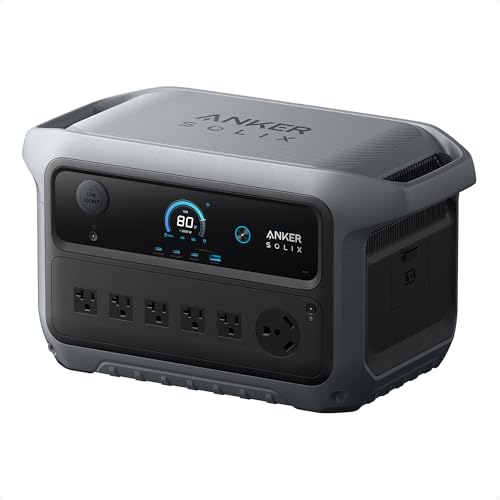

You are planning a weekend camping trip or preparing for a power outage at home. The choice between Jackery and Anker portable power stations can feel overwhelming. This guide breaks down the key differences to help you decide which brand fits your needs in 2026. Whether you need a lightweight unit for hiking or a robust backup for your home, we have you covered. For more options, check out our best portable power station for space heater recommendations.

Buying Guide
Battery Capacity and Output
Battery capacity is measured in watt-hours (Wh) and determines how long your devices will run. For camping, a 300Wh unit may suffice for phones and lights. For home backup, consider 1000Wh or more to power a refrigerator or sump pump. Check out our best portable power station for sump pump guide for higher-capacity needs.
Output ports matter too. Look for AC outlets, USB-C with fast charging, and DC ports. Jackery often includes multiple AC outlets, while Anker focuses on USB-C versatility. Match the output to your device requirements.
Solar Charging Compatibility
Solar charging adds off-grid independence. Both Jackery and Anker offer solar panels, but efficiency varies. Jackery panels are known for durability, while Anker’s are lightweight. Verify the solar input wattage and connector type. Our best solar generator for power outage article explores solar options further.
Some models support fast solar charging, reducing recharge time significantly. If you rely on solar, prioritize high input wattage and MPPT technology for efficiency.
Portability and Weight
Portability is crucial for camping or travel. Jackery units often have handles and compact designs. Anker models are similarly portable but may feature built-in handles for easy carrying. Weight correlates with battery size. A 500Wh unit weighs around 10 to 15 pounds, while larger units exceed 20 pounds.
Consider where you will use the station. For backpacking, a lightweight model under 10 pounds is ideal. For car camping or home use, weight is less critical. Always check dimensions to ensure it fits your vehicle or storage space.
Safety Features and Durability
Both brands prioritize safety with built-in battery management systems (BMS) that prevent overcharge, overcurrent, and short circuits. Jackery uses lithium-ion batteries, while Anker incorporates LiFePO4 (lithium iron phosphate) chemistry for longer lifespan and thermal stability. LiFePO4 batteries typically last over 2000 cycles.
Durability also includes weather resistance. Most units are not fully waterproof, so keep them dry during outdoor use. Look for models with robust casings that withstand minor drops or bumps.
Final Thoughts
Both Jackery and Anker offer excellent portable power stations, but your choice depends on priorities. If you value proven reliability and a wide range of accessories, the Jackery lineup is a solid bet. If you prefer advanced battery technology and faster charging, consider Anker’s models. For a comprehensive overview, the Essential Guide to Portable Power Stations from Majosta is a helpful resource. Explore our EF EcoFlow delta 2 max review for another high-performance option.
Frequently Asked Questions
Which brand is better, Jackery or Anker?
Both are top contenders. Jackery excels in brand reputation and accessory variety, while Anker offers longer-lasting LiFePO4 batteries. The better choice depends on your specific needs, such as capacity, portability, or solar charging speed. In 2026, Anker’s newer models have gained popularity for their cycle life.
Can I use a Jackery or Anker power station for home backup?
Yes, many models are suitable for home backup during outages. Units with 1000Wh or more can power essential devices like lights, fans, and small appliances. For larger loads like sump pumps, check our best portable power station for sump pump guide.
How long do Jackery and Anker batteries last?
Jackery lithium-ion batteries last around 500 to 1000 charge cycles. Anker’s LiFePO4 batteries can exceed 2000 cycles, offering longer lifespan. Battery longevity also depends on usage and storage conditions. Avoid extreme temperatures to maximize battery health.
Are Jackery and Anker power stations safe to use indoors?
Yes, they are safe indoors as they produce no fumes and have built-in safety protections. However, always follow the manufacturer’s guidelines for ventilation and avoid covering the unit during operation. Keep them away from water and flammable materials.