

You’re packing for a weekend camping trip, and the only thing between you and a dead phone is a bulky, heavy power station that barely fits in your trunk. Or maybe you’re preparing for a storm blackout and want something you can grab in seconds without wrestling with cables. The Anker SOLIX C300 DC series promises to solve that with a compact, 288Wh design that slips into a backpack. In this review, we break down the different C300 DC models, their key features, and who each one is best for. Whether you’re a weekend camper, a remote worker, or someone who just wants peace of mind, this guide has you covered. For a broader look at portable power options, check out our BLUETTI AC70 review for a comparison.



Buying Guide: What to Look For in a Portable Power Station
Power Output and Capacity
The Anker SOLIX C300 DC series all share a 300W output and 288Wh capacity, which is enough to charge laptops, drones, mini-fridges, and CPAP machines. But you need to consider what you’ll actually power. For most camping and travel needs, 300W is a sweet spot, but if you plan to run high-draw appliances like a kettle or a space heater, you’ll need something more robust. Our BLUETTI Elite 100 vs Anker SOLIX C1000 comparison highlights how higher-capacity units handle larger loads.
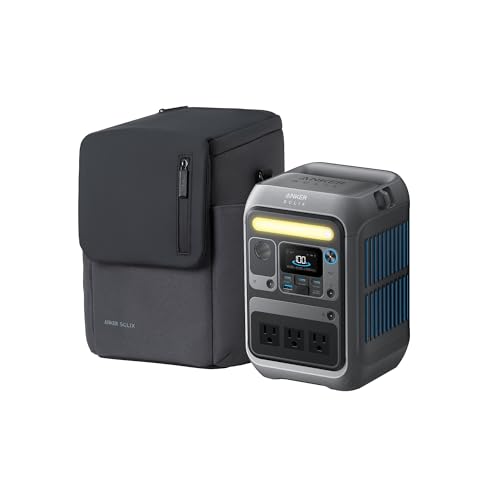
Also, check the surge rating. Some models, like the Anker SOLIX C300 with protective bag, offer a 600W surge, which can handle brief spikes from devices like refrigerators or power tools. For most users, 300W continuous is plenty, but knowing your surge needs helps avoid disappointment.
Ports and Connectivity
All C300 DC models feature seven ports, including two 140W USB-C ports, a 100W USB-C, a 15W USB-C, two USB-A ports, and a car socket. This versatility is a major plus, letting you charge multiple devices simultaneously. However, check the specific arrangement: some models have different port configurations, and the 15W USB-C is only on certain versions. If you rely on USB-C PD for laptops, ensure the model you pick has the 140W capability.
Also, note that the Anker SOLIX C300 DC with protective bag includes a bag that adds minimal weight but protects the unit during transport. That’s a nice touch for frequent travelers.
Recharging Options and Speed
Fast recharging is a game-changer. The C300 DC series supports dual PD 3.1 USB-C charging, which can get you to 80% in about an hour. That’s impressive for a 288Wh unit. Solar input is also available, with up to 100W recommended, but not all models include a solar panel. The bundle with the 60W panel is ideal for off-grid use, while the standalone versions let you add your own panel. Just remember, the power station is not compatible with Anker SOLIX PS30 or other 5V~3A panels, so choose your solar gear wisely.
For home backup, you might also consider a dedicated house backup battery solution, but the C300 DC is a solid portable stopgap.
Portability and Build Quality
The C300 DC is 30% smaller than similar power stations, and at just over 1.4 pounds (for the bag model), it’s incredibly lightweight. The LiFePO4 battery chemistry ensures long life and safety, with smart temperature control and impact resistance. The protective bag adds a layer of security, but the unit itself is built to handle rough conditions. If you’re hiking or backpacking, the small footprint is a huge advantage.
However, note that the shoulder strap is sold separately, so factor that into your budget if you plan to carry it around a lot.
Final Thoughts
After evaluating the Anker SOLIX C300 DC series, we’re impressed by the balance of power, portability, and price. For most campers and travelers, the Anker SOLIX C300 DC Portable Power Station with its protective bag is a fantastic all-rounder, offering a snug fit and easy transport. If you need a solar-ready setup right out of the box, the Anker SOLIX C300 DC Portable Power Station and 60W bundle is your best bet, providing a complete off-grid solution. Both models deliver reliable power in a compact form, making them excellent companions for your next adventure or emergency prep. For a deeper dive into other top portable power stations, our EF EcoFlow delta pro review offers a high-capacity alternative.
Frequently Asked Questions
How long does it take to charge the Anker SOLIX C300 DC?
Using the dual PD 3.1 USB-C ports, you can recharge to 80% in about an hour. With a 60W solar panel, it takes roughly 4 hours, depending on sunlight. In 2026, Anker’s fast-charging tech remains competitive.
Can the C300 DC power a mini-fridge?
Yes, most mini-fridges draw around 50-100W, so the 300W output is sufficient. However, check the fridge’s surge wattage; the 600W surge on some models helps with startup spikes.
What solar panels are compatible with the C300 DC?
Anker recommends their 100W or 60W SOLIX solar panels. It’s not compatible with PS30, PS200, PS400, or 5V~3A USB-C panels, so stick with the recommended options for optimal performance.
Is the C300 DC safe for indoor use?
Absolutely. It uses LiFePO4 batteries with smart temperature control and impact resistance, making it safe for indoor emergency backup. Always follow the manufacturer’s guidelines for ventilation.




