

When the power goes out, your home’s essential appliances, from refrigerators to medical devices, can suddenly become useless. You need a reliable backup power source that can keep things running smoothly until the grid is restored. That’s where a house backup battery comes in. In this guide, we’ve evaluated the top models for 2026, covering everything from compact portable power stations to expandable whole-home systems. Whether you’re preparing for a short outage or aiming for long-term energy independence, we’ve got you covered.
We’ve spent hours researching and comparing the latest home backup batteries, focusing on capacity, output, safety, and ease of use. Our goal is to help you find the perfect solution for your specific needs and budget. If you’re looking for a system that can power your entire home, you might want to check out our guide on the best whole home battery backup without solar for more insights.




Buying Guide: How to Choose the Best House Backup Battery
Selecting the right house backup battery involves more than just picking the highest capacity. You need to consider your power needs, how you’ll use it, and the installation requirements. Here are the key factors we recommend evaluating before making a purchase.
Capacity and Expandability
The capacity, measured in watt-hours (Wh), determines how long your battery can power your home. Think about which appliances you need to run during an outage, such as a refrigerator, lights, and a sump pump. A system like the Jackery HomePower 3600 Pro Max Power Station offers a solid starting capacity of 3584Wh, but it can be expanded to a massive 43kWh for longer outages. Similarly, the Jackery HomePower 3600 Plus and Extra Battery provides a combined 7168Wh out of the box, with expansion options up to 21kWh per unit. If you have a larger home or want to be prepared for multi-day outages, consider a system with high expandability.
For whole-home backup, the ECO-WORTHY 48V Home Backup Power,30720 Wh is a powerhouse, delivering 30.72kWh of storage. It’s designed to handle high-power appliances like air conditioners and can be expanded with additional batteries to reach up to 163.84kWh. This level of capacity is ideal for off-grid living or as a permanent home backup solution.
Power Output and Voltage
Check the inverter’s wattage to ensure it can handle the starting surge of your appliances. A 120V system is standard for most homes, but if you have larger appliances like a well pump or electric dryer, you’ll need a 120V/240V split-phase system. The Jackery HomePower 3600 Pro Max Power Station delivers 4000W of 120V/240V power from a single unit, making it a versatile choice. The ECO-WORTHY 48V Home Backup Power offers a 10000W pure sine wave inverter, with the ability to parallel up to six inverters for a total output of 60kW.
For most households, a 3600W output is sufficient to run essential circuits. The ABOK Ark3600 Portable Power Station with 400W provides 3600W rated output and a 4500W surge capacity, which can handle 99% of household appliances. If you need to power a 240V well pump, you’ll need a system that supports split-phase output.
Battery Chemistry and Lifespan
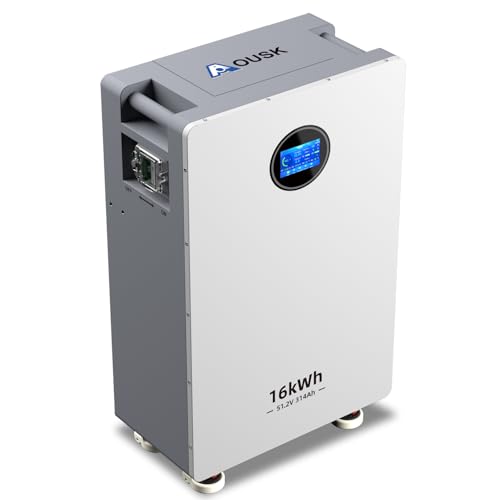
Lithium Iron Phosphate (LiFePO4) batteries are the gold standard for home backup due to their long lifespan and safety. They can last for thousands of cycles (typically 4,000 to 6,000 cycles) and are more thermally stable than other lithium-ion chemistries. The EF ECOFLOW DELTA Pro Ultra Series 6144Wh uses EV-grade LFP cells and a dual BMS for maximum safety and longevity. The AOUSK 51.2V 314Ah Lifepo4 16.07kWh Lithium Battery also boasts a 200A BMS and up to 6,000 cycles, ensuring years of reliable service.
When comparing models, look for a battery that offers at least 4,000 cycles or a 10-year lifespan. This ensures that your investment will pay off over the long term. Also, consider the operating temperature range, especially if you live in a region with extreme temperatures. The Jackery HomePower 3600 Plus is built with high-temp resistant ceramic membrane cells and can operate in temperatures as low as -4°F, making it a robust choice for harsh climates.
Recharging Options and Smart Features
Your backup battery should be able to recharge from multiple sources, including AC wall outlets, solar panels, and even a gas generator. The more options you have, the more resilient your system will be. The Jackery HomePower 3600 Pro Max offers 8 ways to recharge, including solar, AC, and generator compatibility. The ABOK Ark3600 also supports AC, PV, and car charging, with a fast 1.29-hour recharge time when using AC+PV.
Smart features like a UPS mode, mobile app monitoring, and automatic storm charging can greatly enhance your experience. The BLUETTI FridgePower Backup System features DualGuard UPS with a 10ms switch to battery during blackouts, ensuring your fridge never stops. The AOUSK battery includes a full-color display and Bluetooth/Wi-Fi app for real-time monitoring. For a deeper dive into smart home backup systems, check out our EF EcoFlow delta pro ultra inverter review.
Final Thoughts
Choosing the best house backup battery depends on your specific needs, whether you want a portable, plug-and-play solution or a permanent whole-home system. For most households, the Jackery HomePower 3600 Pro Max Power Station offers an excellent balance of power, expandability, and ease of use, making it our top pick for essential home backup. If you’re looking for a more comprehensive, whole-home solution with massive capacity, the ECO-WORTHY 48V Home Backup Power is a formidable choice that can power your entire house for days. Both options provide reliable, clean energy to keep your life running smoothly during any outage.
Frequently Asked Questions
How long can a house backup battery power my home?
The duration depends on the battery capacity and your energy consumption. A 3.6kWh battery can power essential appliances like a refrigerator and lights for about 1-2 days. Larger systems, such as the 30.72kWh ECO-WORTHY, can last for a week or more for an average home. In 2026, many models offer expandable capacity to extend runtime.
Can I install a house backup battery myself?
It depends on the system. Portable power stations like the Jackery HomePower 3600 Pro Max are designed for plug-and-play use, requiring no professional installation. For permanent whole-home systems, such as the ECO-WORTHY 48V, we recommend consulting a licensed electrician to ensure safe and code-compliant installation. Always check local regulations.
What is the lifespan of a house backup battery?
Most modern backup batteries use LiFePO4 chemistry, which offers a lifespan of 4,000 to 6,000 cycles, translating to 10-15 years of typical use. For example, the AOUSK battery is rated for 6,000 cycles at 80% state of health. This makes them a long-term investment for your home.
Can I use solar panels to recharge my house backup battery?
Yes, many home backup batteries are solar-compatible. The Jackery HomePower 3600 Plus and ABOK Ark3600 come with solar panel options, allowing you to recharge using clean energy. This is an excellent way to achieve energy independence. For more information on solar generators, check out our EF EcoFlow delta pro review.




