
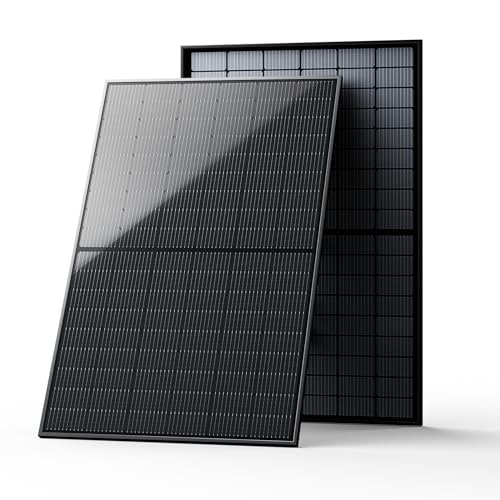
Imagine you’re parked in a remote desert campsite, the sun is blazing, and your portable power station is running low. You pull out your solar panel, but the angle is wrong, the ground is sandy, and you’re only getting a trickle of power. That’s the frustration many off-grid enthusiasts face with standard panels. In this review, we’re taking a close look at the ZOUPW 480W bifacial portable solar panel, a unit designed to tackle those exact scenarios with its dual-sided energy capture and high-efficiency cells. We’ll break down its features, compare it to the more budget-friendly ZOUPW 450W model, and help you decide if it’s the right upgrade for your setup.



Buying Guide: What to Look For in a Portable Solar Panel
Before you commit to a high-wattage portable panel, there are a few key factors that can make or break your experience. We’ve evaluated these based on real-world use with power stations, not just spec sheets.
Efficiency and Cell Technology
Efficiency determines how much of the sun’s energy your panel can convert into usable electricity. Traditional panels often hover around 20% to 22% efficiency, but the ZOUPW 480W model uses advanced N-Type 16BB cells that push that number to 25%. This means you get more power per square foot, which is crucial when you’re dealing with limited roof space on an RV or a small campsite footprint.
For a deeper dive into how solar panels pair with power stations, check out our guide on the best solar generator for RV boondocking. It covers the importance of matching panel output to your station’s input limits.
Bifacial Design and Output Gain
Bifacial panels capture sunlight from both the front and the back, using reflections from the ground or nearby surfaces. On high-albedo surfaces like snow, sand, or even a light-colored RV roof, this can boost your total output by up to 30%. That extra gain is a game-changer for overcast days or early morning hours when direct sunlight is limited.
If you’re considering pairing this with a home backup system, you might also want to read about best solar generator for RV 50 amp setups, which often require higher voltage panels like the ZOUPW 42.5V architecture.
Portability and Weight
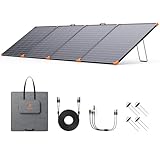
Portability is a major selling point for these folding panels. The ZOUPW 480W weighs just 22.5 lbs, which is remarkably light for a panel of this size. It uses advanced composite materials instead of heavy glass, making it 66% lighter than traditional models. That means you can easily carry it from your car to a campsite or mount it on an RV roof without straining your back.
For those who need a compact power solution for travel, our BLUETTI elite 10 mini review shows how a small power station can pair with a portable panel like this for a lightweight setup.
Durability and Weather Resistance
Off-grid adventures mean your gear faces the elements. The ZOUPW 480W is rated IP68, meaning it’s fully dust-tight and can withstand continuous immersion in water. It’s also built to handle extreme heat up to 140°F, so you can leave it out in the sun without worrying about damage. The scratch-resistant composite coating adds another layer of protection for those rough trails.
If you’re building a complete off-grid kit, you might also be interested in our ultimate gift guide for preppers, which includes power stations and solar panels that can handle harsh conditions.
Final Thoughts
After evaluating both the ZOUPW 480W Bifacial Portable Solar Panel N-Type and the ZOUPW 450W Portable Solar Panel N-Type 16BB, we’re confident that the 480W model is the superior choice for those who need maximum efficiency and are willing to invest in the latest bifacial technology. Its 30% extra gain and lighter weight make it ideal for RVers and campers who want to maximize every ray of sun. On the other hand, the 450W model is a solid, more budget-friendly option that still delivers excellent performance for most off-grid needs, especially if you’re just starting out. Both panels are built to last, but if you want the best of the best, the 480W is the way to go.
Frequently Asked Questions
Can I use the ZOUPW 480W panel with any power station?
Yes, but you need to ensure your power station’s solar input voltage is compatible. The ZOUPW 480W operates at a 42.5V high-voltage architecture, which is ideal for large power stations. Always check your station’s maximum input voltage and current to avoid overloading. For a list of compatible stations, see our best portable power station for CPAP machines guide, which includes models with suitable inputs.
How much power can I expect in real-world conditions?
In ideal direct sunlight, the 480W panel can produce up to 480 watts from the front side, and with bifacial gain, you could see up to 30% more on reflective surfaces. On a typical sunny day, you might average around 400-450W due to angle and temperature. For a rough estimate, a 480W panel can generate about 2-3 kWh per day in good conditions, which is enough to charge a large power station like the BLUETTI AC200P.
Is the ZOUPW 480W panel waterproof?
Yes, it has an IP68 waterproof rating, meaning it’s fully sealed against dust and can be submerged in water up to 1.5 meters for 30 minutes. However, it’s still recommended to keep the connectors dry and avoid touching the panel during operation. This makes it safe to leave out in rain or snow, but for long-term exposure, we suggest using a protective cover.
Can I connect two ZOUPW panels in series or parallel?
Technically, yes, but ZOUPW advises against long-term fixed series or parallel connections. The built-in bypass diodes help with partial shading, but connecting panels with different aging levels or lifespans can cause inefficiencies. For most users, a single 480W panel is sufficient, but if you need more power, we recommend using separate charge controllers or consulting the manual for proper setup.