
Imagine this: you are boondocking in a remote canyon, the sunset paints the sky, and suddenly your RV fridge hums to life, powered by your battery bank. But when you plug into shore power at the next campground, you want seamless switching without a flicker. That is exactly what an RV inverter charger with a transfer switch delivers. In this guide, we evaluate the top models for 2026, focusing on pure sine wave output, automatic transfer switches, and reliable power conversion for your home on wheels. Whether you are a full-time RVer or a weekend camper, the right inverter charger keeps your appliances running smoothly. For a broader look at backup power, check out our best residential whole house generator guide.




Buying Guide
Automatic Transfer Switch Speed
An automatic transfer switch (ATS) is the heart of any inverter charger. It detects when shore power is available and switches to battery power when it drops. The speed of this switch matters. Some models, like the OLTEANP and EGSCATEE units, claim a 12ms transfer time, which is fast enough to keep sensitive electronics running without interruption. Slower switches may cause a brief blink, which can reset clocks or disrupt a CPAP machine. For critical loads, prioritize a model with a verified fast transfer speed.
Also consider whether the ATS is integrated or requires external wiring. Integrated units simplify installation and reduce the number of components in your RV. For a deeper dive into generator options, read our best 5000 watt dual fuel inverter generator guide.
Pure Sine Wave vs. Modified Sine Wave
Pure sine wave inverters produce clean, grid-like AC power that is safe for all electronics, including sensitive devices like laptops, TVs, and medical equipment. Modified sine wave inverters can cause buzzing, overheating, or even damage to certain appliances. Every product in this review uses pure sine wave output, so you can power your coffee maker, microwave, and CPAP machine with confidence. If you run an RV refrigerator with a digital control board, pure sine wave is essential.
Continuous Power vs. Surge Capacity
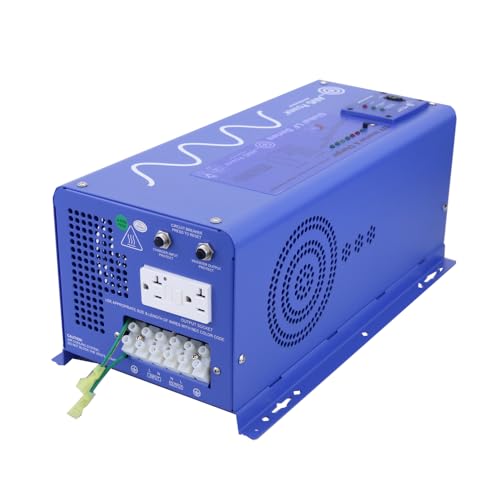
Continuous power rating tells you how much load the inverter can handle indefinitely. Surge capacity handles the startup draw of motors, compressors, and pumps. For example, a 3000W inverter with a 9000W surge (like the AIMS 3000W) can start a large RV air conditioner or a refrigerator compressor. Always verify that your combined running wattage stays below the continuous rating, and that surge loads are within the peak capacity. For cold weather camping, see our best cold weather generator picks.
Battery Charging Profiles
If you choose an inverter charger (not just an inverter), you get a built-in battery charger. This is a major advantage for RVers who want to recharge their battery bank from shore power. Look for multi-stage charging that supports different battery chemistries: AGM, gel, flooded lead-acid, and lithium LiFePO4. The AIMS models offer seven selectable profiles and a lithium wake-up feature for over-discharged batteries. This flexibility lets you upgrade your battery bank later without replacing the inverter charger. For backup power ideas, visit our best backup generator for house guide.
Final Thoughts
After evaluating the top models, our recommendation depends on your power needs and budget. For RVers who want a premium, all-in-one solution with robust battery charging and a massive surge capacity, the AIMS 3000W 12V Pure Sine Inverter Charger w is a powerhouse that handles heavy loads and offers advanced charging profiles. If you prefer a more budget-friendly, feature-rich option with Bluetooth monitoring and a fast transfer switch, the Renogy Inverter PUH, 3000W Pure Sine Wave Power delivers excellent efficiency and remote control through the Renogy app. Both units provide reliable pure sine wave power and automatic transfer switching, ensuring your RV adventures are powered without interruption.
Frequently Asked Questions
What is the difference between an inverter and an inverter charger? An inverter only converts DC battery power to AC power. An inverter charger also includes a built-in battery charger that can recharge your batteries from shore power or a generator. This combination simplifies your RV power system and is ideal for most setups.
How fast does an automatic transfer switch need to be? For most RV appliances, a transfer time under 20 milliseconds is sufficient to prevent noticeable interruption. Some models achieve 12ms, which is fast enough for sensitive electronics like CPAP machines and computers. Slower switches may cause a brief flicker.
Can I use an inverter charger with lithium batteries? Yes, many modern inverter chargers support lithium LiFePO4 batteries with selectable charging profiles. The AIMS models, for example, include a lithium wake-up feature for over-discharged batteries. Always confirm compatibility before purchasing.
Do I need a pure sine wave inverter for my RV? Yes, if you plan to run sensitive electronics like laptops, TVs, or CPAP machines. Pure sine wave output prevents buzzing, overheating, and potential damage. For power tools and simple resistive loads, modified sine wave may work, but pure sine wave is the safer choice for 2026.