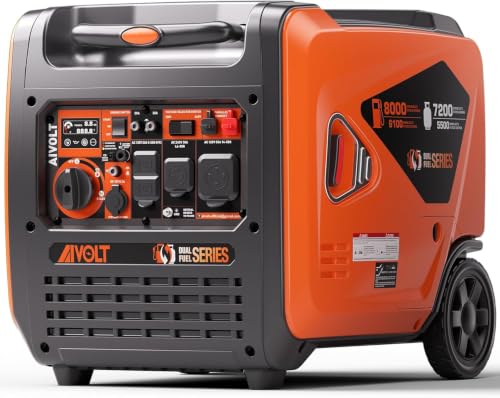

Imagine a storm knocks out your power for days. Your refrigerator thaws, the sump pump fails, and the Wi-Fi goes dark. A portable generator with a 50 amp outlet can be your lifeline, powering essential circuits or even your whole home. This guide focuses on the best options for home backup, comparing top models from Westinghouse and DuroStar to help you choose the right one.
We’ve evaluated these generators for power output, fuel flexibility, noise levels, and safety features. Whether you need to run a few appliances or want to connect directly to your home’s electrical panel, we’ve got you covered. For a deeper dive into larger inverter options, check out our best large inverter generator guide.





Buying Guide: What to Look for in a 50 Amp Portable Generator
Choosing the right generator involves more than just looking at wattage. Here are the key factors to consider before making your purchase.
Power Output and Wattage
First, determine your power needs. Add up the wattage of the appliances you want to run during an outage. A generator with a 50 amp outlet typically delivers 9,000 to 12,000 running watts, which can handle a central air conditioner, well pump, and refrigerator simultaneously.
Consider both running watts and peak watts. Running watts sustain continuous operation, while peak watts handle startup surges. For whole-home backup, aim for at least 9,500 running watts. For more on sizing, see our dual fuel inverter generator for RV guide for a different perspective on wattage needs.
Fuel Type and Flexibility
Most 50 amp generators run on gasoline, propane, or both. Dual fuel models offer flexibility: gasoline provides maximum power, while propane burns cleaner and stores longer. Some models even offer natural gas, giving you a direct line to your home’s gas supply.
Think about fuel availability and storage. Propane is great for emergencies because it doesn’t degrade like gasoline. If you want to connect to natural gas, look for a tri-fuel model. This flexibility can be a lifesaver during extended outages.
Transfer Switch Readiness and Outlets
A 50 amp outlet (NEMA 14-50R) is essential for connecting to a transfer switch or interlock kit. This allows you to power your home’s circuits directly, avoiding extension cords. Look for generators with both 50A and 30A outlets for additional flexibility.
Also, check for GFCI outlets for safety and rubber covers to protect against dust and moisture. If you plan to use the generator for RV travel, ensure the 50A outlet is RV-ready. For apartment dwellers, a smaller unit might be more practical, as discussed in our best portable generator for apartments article.
Noise Level and Safety Features
Generators can be loud. Inverter models are quieter and produce cleaner power, making them safe for sensitive electronics. Look for a noise rating around 60 dBA or lower, which is roughly the level of a normal conversation.
Safety is paramount. Automatic low-oil shutdown protects the engine, and a carbon monoxide (CO) sensor shuts down the generator if dangerous fumes build up. These features are essential for protecting your family and equipment. For a quieter option, check out the westinghouse 2550 peak watt super quiet review.
Final Thoughts
Choosing the best portable generator with a 50 amp outlet depends on your specific needs. For a powerful, inverter-based option that’s safe for electronics, the Westinghouse 12000 Peak Watt Dual Fuel is a top pick. If you’re on a tighter budget and need a reliable workhorse, the DuroStar DS13000MX 13,000-Watt 500cc Dual Fuel offers excellent value and solid performance.
Frequently Asked Questions
Can a 50 amp generator power a whole house?
Yes, a 50 amp generator can power most essential circuits in a typical home, especially when paired with a transfer switch. It can run a central air conditioner, refrigerator, well pump, and lighting simultaneously. Just be sure to manage your load to avoid overloading the generator.
What is the difference between a 30 amp and 50 amp outlet on a generator?
A 30 amp outlet (L14-30R) provides up to 3,600 watts at 120/240V, while a 50 amp outlet (14-50R) provides up to 12,000 watts. The 50 amp outlet is necessary for powering larger appliances or connecting to a whole-house transfer switch.
Are inverter generators with 50 amp outlets worth it?
Absolutely. Inverter generators produce cleaner power (less than 3% THD), making them safe for laptops, TVs, and other sensitive electronics. They are also more fuel-efficient and quieter than conventional generators, making them a great investment for home backup.
How long can a 50 amp generator run continuously?
Run time varies by model and load. Many 50 amp generators can run for 12 to 19 hours at 25% load on a full tank of gasoline. Using propane may reduce run time slightly, but it offers longer storage life. Check the specifications of each model for exact figures.
For more tips on choosing the right generator, explore our inverter generator category.