Picture this: a storm knocks out your power in the middle of the night. Your fridge full of food, your sump pump, and your home’s heating system all depend on a safe, reliable connection to your generator. That is where a transfer switch becomes your most valuable backup accessory. Without one, you risk dangerous backfeeding that can harm utility workers and damage your equipment. This guide covers the top-rated manual transfer switches for 2026, helping you choose the right capacity, circuit count, and brand for your home or small business. Whether you need a heavy-duty 200-amp unit or a compact 30-amp kit, we have evaluated the best options on the market.
For a deeper look at whole-house power solutions, check out our guide on top whole house generators.




Buying Guide
Capacity and Amperage
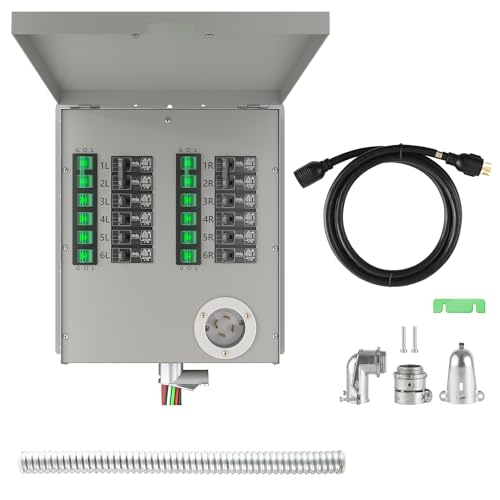
Your generator’s output rating determines the transfer switch amperage you need. A 30-amp switch works well for portable generators powering essential circuits like lights, fridge, and a furnace. For larger loads including well pumps, HVAC, and electric stoves, a 50-amp or even 200-amp switch is necessary. The XMK 100A manual transfer switch handles up to 24,000 watts, while the Tzechkii 200-amp model supports 48,000 watts for whole-home backup. Always match the switch rating to your generator’s maximum output to avoid overloading.
If you are pairing a transfer switch with a specific generator type, see our best dual fuel generator picks for reliable fuel flexibility.
Number of Circuits
Transfer switches come with a fixed number of circuits, typically 6, 10, or 12. A 6-circuit switch is ideal for small homes, RVs, or workshops where you only need to power a few critical loads. A 10- or 12-circuit switch gives you more flexibility, allowing you to cover additional appliances like a sump pump, well pump, or home office equipment. The Nature’s Generator 50-amp model supports up to 12 circuits, configurable as twelve 120V circuits or six 240V circuits, making it highly versatile for expanding needs.
Installation and Wiring
Most manual transfer switches require professional installation by a licensed electrician, especially those with higher amperage ratings. Pre-wired models, like the VEVOR 50-amp kit, simplify the process with clearly labeled wires and included power inlet boxes. Look for switches with ample wire bending space, such as the XMK 100A, which accommodates wires up to 3 AWG. For DIY users, the EZ Generator Switch offers a simpler setup that does not require touching existing circuit breakers, but always follow local electrical codes.
For portable power solutions that work with these switches, explore our best portable power station roundup.
Durability and Weather Resistance
If your transfer switch will be installed outdoors, choose a model with a NEMA 3R rating for protection against rain, snow, and wind. The XMK 100A and Tzechkii 200-amp switches feature galvanized steel enclosures that resist corrosion and rust. For indoor use, the Nature’s Generator models have rugged steel housings with illuminated rocker switches that clearly indicate generator power status. A durable construction ensures long-term reliability, often exceeding a decade of trouble-free operation.
Final Thoughts
Choosing the best transfer switch for your generator comes down to balancing capacity, circuit count, and budget. For most homeowners with a standard portable generator, the 100A Manual Transfer Switch for Generator,Manual from XMK offers exceptional value with its high 100-amp rating, NEMA 3R enclosure, and easy installation at a very accessible price point. If you need a complete, pre-wired kit with more circuits and universal generator compatibility, the Nature’s Generator 50 Amp Manual Transfer Switch is a top contender, supporting up to 12 circuits and including a power inlet and cord for a seamless setup. Both options provide safe, reliable power transfer for your home backup needs in 2026.
Frequently Asked Questions
What size transfer switch do I need for my generator?
Your transfer switch amperage should match or exceed your generator’s output. A 30-amp switch works for generators up to 7,500 watts, while a 50-amp switch handles up to 12,500 watts. For larger portable or standby generators, 100-amp or 200-amp switches are available. Always check your generator’s rated wattage before purchasing.
Can I install a manual transfer switch myself?
While some pre-wired kits are designed for experienced DIYers, most local electrical codes require installation by a licensed electrician. Improper wiring can lead to backfeeding, equipment damage, or electrocution. For safety and compliance, we recommend professional installation for any transfer switch rated above 30 amps.
Are transfer switches compatible with solar generators or power stations?
Many modern transfer switches, especially those from Nature’s Generator, are designed to work with all generator types including lithium battery power stations, solar generators, and fuel-based units. Look for models that support both bonded and floating neutrals for universal compatibility. For more on solar backup, see our best solar generators guide.
What is the difference between a manual and automatic transfer switch?
A manual transfer switch requires you to flip a lever or switch to transfer power from utility to generator. An automatic transfer switch detects a power outage and switches to generator power without human intervention. Manual switches are more affordable and reliable, while automatic switches offer convenience but cost more and require more complex installation.