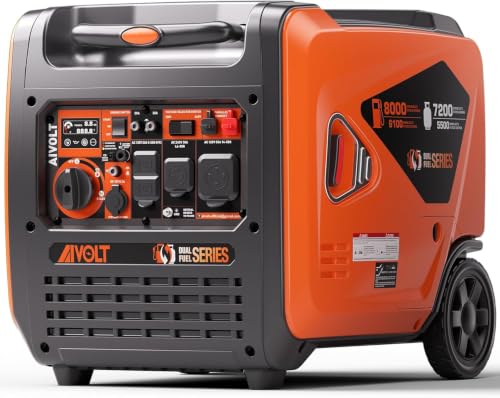

Picture this: you’re deep in the woods, the campfire crackles, and the only sound is the rustle of leaves. Then, a loud generator roars to life, shattering the tranquility. Finding the quietest dual fuel generator for camping is essential for preserving that serene outdoor experience. This guide reviews the top models that combine whisper-quiet operation with the flexibility of running on both gasoline and propane, ensuring you have dependable power without the noise pollution.
We have evaluated eight of the best quiet dual fuel generators on the market, focusing on noise levels, power output, portability, and key safety features. Whether you’re powering an RV, a tent site, or a tailgate, these generators are designed to keep the peace while keeping your devices charged. For a broader look at options, check out our guide on top dual fuel inverter generators for RV use.

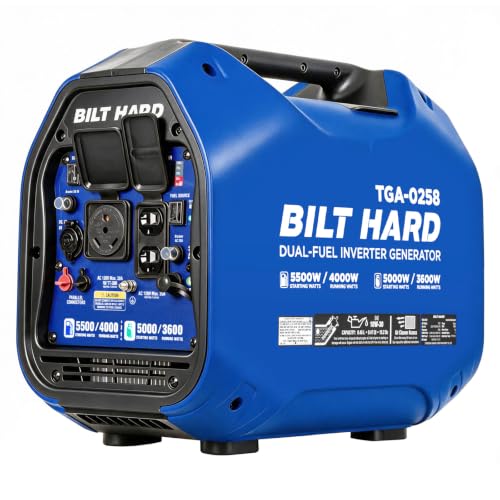


Buying Guide: What to Look for in a Quiet Dual Fuel Generator for Camping
Noise Level (dBA)
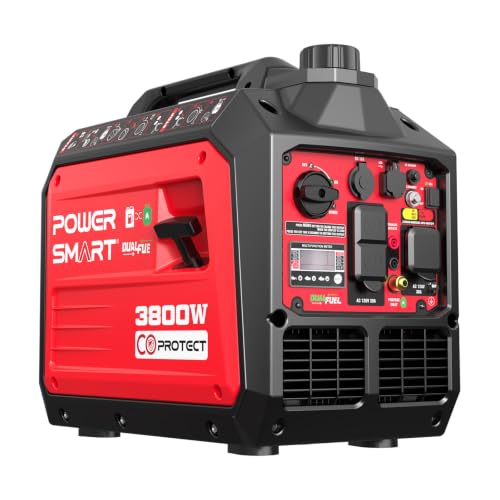
The primary factor for campers is how much noise a generator makes. Noise is measured in decibels (dBA), and a difference of just a few dBA can be significant. For camping, look for models rated at 60 dBA or less, which is comparable to a normal conversation. Many of the generators in our list, like the PowerSmart 3800 Watt, operate at 59 dBA or even lower, making them ideal for quiet environments.
Keep in mind that noise levels are often measured at a certain distance, such as 23 feet, and under a specific load. Eco-mode features can further reduce noise by lowering engine speed when less power is needed. This is a key feature for those who want the quietest possible operation.
Power Output and Fuel Flexibility
A dual fuel generator offers the benefit of running on either gasoline or propane, giving you flexibility based on availability and storage. For camping, propane is often preferred because it burns cleaner, has a longer shelf life, and is quieter. However, you need enough surge watts to start appliances like air conditioners or microwaves.
Consider your power needs: a small campsite might only need 2,000 running watts, while an RV with a large AC unit might require 4,000 or more. Models like the WEN 3600-Watt and Champion 4000-Watt offer a good balance for most campers, providing enough power for essentials without being overkill. For more on fuel type advantages, see our article on dual fuel generators pros and cons.
Portability and Weight
Camping often involves moving your generator from the car to the site, so weight and portability matter. Look for models with built-in wheels, telescoping handles, or compact designs. The A-iPower 2300W, for instance, weighs only 40 pounds, making it easy to carry. Heavier models like the WEN 4800-Watt may have wheels to ease transport.
Also consider the physical footprint: some generators are designed to be stackable or have a low profile for easier storage in an RV compartment. A compact design is a huge plus for campers with limited space.
Safety and Clean Power
Safety is non-negotiable, especially when camping. Look for generators with built-in carbon monoxide (CO) sensors that automatically shut off the unit if dangerous levels are detected. This is a critical feature for any enclosed or semi-enclosed space. Additionally, inverter generators provide clean power with low total harmonic distortion (THD), typically under 3%, which is safe for sensitive electronics like laptops, phones, and CPAP machines.
Other safety features include low-oil shutdown and overload protection. These not only protect your equipment but also extend the life of the generator. For a deeper dive into inverter technology, read our review of the best rated inverter generator for home.
Final Thoughts
Choosing the quietest dual fuel generator for camping comes down to balancing noise, power, and portability. For campers who prioritize near-silent operation and long run times on propane, the PowerSmart 3800 Watt Dual Fuel Inverter Generator stands out with its sub-59 dBA noise level and impressive fuel efficiency. If you need more power for an RV or larger setup, the Champion 4000-Watt Dual Fuel RV Ready offers a robust output with a quiet 64 dBA rating and excellent warranty support, making it a reliable companion for any camping adventure.
Frequently Asked Questions
How quiet is a 59 dBA generator for camping?
A 59 dBA generator is roughly as loud as a normal conversation or a quiet air conditioner. It is quiet enough for most campgrounds and will not disturb nearby campers, especially when used with eco-mode. In 2026, this is considered a benchmark for truly quiet camping generators.
Can I run a dual fuel generator on propane only?
Yes, most dual fuel generators can run exclusively on propane. You simply connect a propane tank via the included hose and switch the fuel selector. Propane is cleaner, quieter, and has a longer shelf life than gasoline, making it ideal for camping. However, you may experience a slight reduction in peak wattage when using propane.
What size generator do I need for camping?
For basic camping needs like lights, a small refrigerator, and charging devices, a 2,000 to 3,000 watt generator is sufficient. For running an RV air conditioner or a microwave, you will need at least 3,500 to 4,000 watts. Always check the starting watts of your appliances to ensure your generator can handle the surge. For more guidance, check our best dual fuel portable generator for a house article for sizing tips.
Are dual fuel generators safe for use in rain?
Dual fuel generators are not waterproof and should never be used in rain or wet conditions without proper shelter. Always operate them on a dry, level surface under a canopy or generator tent that allows for ventilation. Never run a generator indoors or in an enclosed space due to the risk of carbon monoxide poisoning.