

Imagine a storm knocks out your power in the middle of the night. Your refrigerator hums to a stop, the sump pump goes silent, and you are left fumbling for flashlights. That is exactly when a reliable inverter generator becomes your home’s best friend. Unlike bulky conventional generators, inverter models deliver clean, stable power that is safe for sensitive electronics like laptops and medical devices. They are also quieter and more fuel efficient. In this guide, we have evaluated the top models on the market to help you choose the best rated inverter generator for home use in 2026. Whether you need backup for a few essentials or whole-house power, we have you covered.
For more on clean power, check out our guide to the best portable generator with low THD.




Buying Guide
Power Output and Capacity
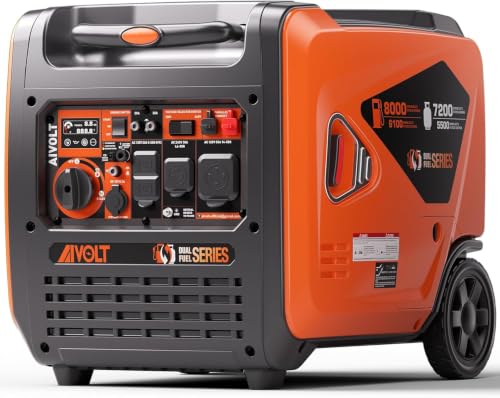
First, determine how much wattage you need. A refrigerator might draw 600 to 800 running watts, while a sump pump could require 1000 watts. Add up the running watts of essential appliances, then factor in surge watts for startup. For most homes, a generator with 4000 to 6000 surge watts is a solid choice. Models like the AIVOLT 8000W Dual Fuel Inverter Generator 50A RV deliver ample power for both home and RV use.
Fuel Type and Efficiency
Dual fuel generators offer flexibility: they run on gasoline or propane. Propane burns cleaner and stores longer, while gasoline provides higher wattage. Look for ECO mode, which adjusts engine speed to save fuel. The Westinghouse 5000 Peak Watt Super Quiet Dual Fuel generator, for instance, can run up to 18 hours on a tank. For more on this topic, see our dual fuel generators pros and cons guide.
Noise Level and Portability
Inverter generators are quieter than conventional ones, but noise levels vary. Models like the PowerSmart 4000 Watt Portable Inverter Generator operate at just 59 dBA, comparable to a normal conversation. Portability matters too: look for models with wheels and telescoping handles. The Oxseryn 4400-Watts Inverter Generator weighs only 56 pounds, making it easy to move around.
Safety Features
Carbon monoxide (CO) shutdown sensors are essential for preventing poisoning. Many modern generators, like the WEN 6800-Watt Dual Fuel RV-Ready Electric Start, include automatic CO detection. Low-oil shutdown and overload protection also safeguard the engine. These features give you peace of mind during extended outages. For more affordable options, see our best cheap inverter generator picks.
Final Thoughts
Choosing the right inverter generator comes down to your specific needs: power, fuel type, and portability. For heavy-duty home backup, the AIVOLT 8000W Dual Fuel Inverter Generator 50A RV offers massive output and dual fuel flexibility. If you prefer a lighter, more budget-friendly option for essentials, the Oxseryn 4400-Watts Inverter Generator delivers reliable power at a great value. Both models are among the best rated inverter generators for home use in 2026.
Frequently Asked Questions
What size inverter generator do I need for my home?
For basic essentials like a refrigerator, lights, and a sump pump, a generator with 4000 to 5000 surge watts is usually sufficient. For larger appliances or whole-house backup, consider models with 6000 to 8000 surge watts. Always calculate your total running and surge wattage before buying.
Are inverter generators safe for sensitive electronics?
Yes, inverter generators produce clean power with total harmonic distortion (THD) below 3%, which is safe for laptops, phones, and medical devices. This makes them ideal for home backup compared to conventional generators.
How long can an inverter generator run continuously?
Run time varies by model and load. Many generators run 8 to 16 hours on a full tank at 25% load. ECO mode extends runtime further. For example, the Westinghouse 5000 Peak Watt generator runs up to 18 hours. For more details, visit our inverter generators category page.
Can I run an inverter generator indoors?
No. Never run any generator indoors, including inverter models. They produce carbon monoxide, which is deadly. Always operate generators outdoors, at least 20 feet from windows and doors, and use a CO monitor for extra safety.


