Imagine a winter storm knocks out your power for days. Your family huddles in the cold, food spoils in the fridge, and you worry about sump pump failure. A standby generator changes everything. It automatically kicks on when the grid goes down, restoring power to your entire home without any manual effort. In this guide, we review the best standby generators for home use in 2026, focusing on reliable models from Generac and Westinghouse. Whether you need a compact unit for essentials or a powerhouse for whole-house coverage, we have you covered. For more context, check out our top whole house generators for 2026.



Buying Guide
Power Output and Capacity
Your generator’s wattage rating determines what you can run during an outage. A 10 kW unit handles essential circuits like lights, refrigerator, and furnace. For whole-house coverage with central air conditioning and well pump, you need 20 kW or more. Always calculate your home’s critical loads before choosing.
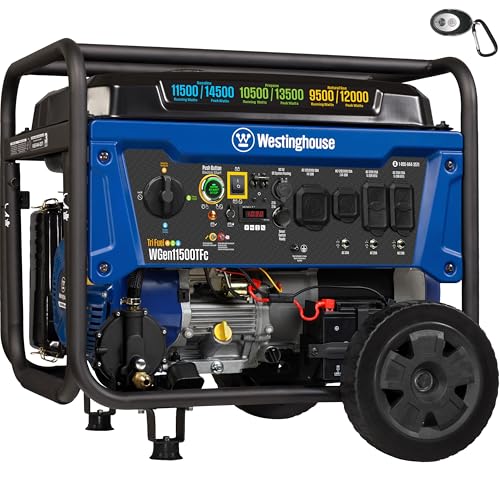
Consider the difference between running watts and peak watts. Running watts sustain continuous operation, while peak watts cover startup surges from motors. Generac’s 14 kW and 22 kW models offer robust running wattage for most homes. For portable standby options, the Westinghouse 14500 provides impressive peak power. Read our standby generator category page for more sizing tips.
Fuel Type and Efficiency
Standby generators typically run on natural gas or propane. Natural gas offers unlimited runtime via your home’s gas line, while propane provides portability and longer storage life. Generac’s models are optimized for natural gas, delivering the lowest total cost of ownership with electronic fuel control. The Westinghouse 14500 is a tri-fuel unit, giving you flexibility with gasoline, propane, or natural gas.
Fuel efficiency matters during extended outages. Generac’s advanced ignition system reduces fuel consumption and emissions. For homeowners seeking fuel flexibility, the Westinghouse is a standout. Explore dual fuel generator options if you want multiple fuel choices.
Monitoring and Control Features
Modern standby generators offer remote monitoring via cellular or WiFi apps. Generac’s Mobile Link app lets you check generator status, receive maintenance alerts, and start or stop the unit from anywhere. This is invaluable for vacation homes or during severe weather when you cannot be home.
Look for generators with built-in cellular connectivity for reliable remote access. Generac’s 14 kW and 22 kW models include this feature, along with oil level sensors and cold start performance. For portable options, the Westinghouse offers remote electric start. See our generators category for more monitoring insights.
Warranty and Support
A standby generator is a long-term investment, so warranty coverage matters. Generac provides a 5-year limited warranty and 24/7 customer support, giving you peace of mind. Westinghouse backs its portable standby with a 3-year residential warranty and lifetime technical support.
Consider the availability of local service providers. Generac’s extensive dealer network ensures prompt repairs if needed. For portable units, ease of maintenance and parts availability are important. Check our inverter generator guide for backup options that might suit smaller loads.
Final Thoughts
Choosing the best standby generator for your home comes down to power needs, fuel preference, and budget. For whole-house coverage with advanced monitoring, the Generac 22kW Whole Home Generator is a powerhouse that handles large homes seamlessly. If you want a versatile portable option that can also serve as a backup with an automatic transfer switch, the Westinghouse 14500 Peak Watt Tri-Fuel Home Backup offers exceptional flexibility and value.
Frequently Asked Questions
How do I size a standby generator for my home?
Calculate the total running watts of essential appliances like refrigerator, furnace, lights, and sump pump. Add the starting surge watts for motors. A 10 kW generator covers basic circuits, while 20 kW or more handles whole-house needs. Use an online calculator or consult a professional for precise sizing in 2026.
Can a standby generator run on natural gas?
Yes, most standby generators are designed for natural gas or propane. Natural gas provides unlimited runtime via your home’s gas line. Generac’s models are optimized for natural gas, offering efficient and low-emission operation. The Westinghouse 14500 also supports natural gas for flexible fuel choices.
How often should I maintain my standby generator?
Perform monthly checks, including running the generator under load for 15 minutes. Change oil and filters annually or after 100 hours of use. Generac’s Mobile Link app sends maintenance alerts. For more tips, visit our standby generator category.
What is the difference between a standby generator and a portable generator?
A standby generator is permanently installed, automatically starts during an outage, and connects to your home’s electrical panel. A portable generator requires manual setup, extension cords, and refueling. Standby generators offer convenience and whole-house coverage, while portables are more affordable and versatile for camping or job sites.