Imagine it’s a stormy night, and suddenly the lights flicker and die. Your fridge starts warming, the sump pump stops, and your phone is at 10%. For many homeowners, power outages are a recurring nightmare. That’s where a reliable inverter generator for home backup becomes a lifesaver. Unlike traditional generators, inverter models deliver clean, stable power that’s safe for your sensitive electronics, and they do it more quietly and efficiently.
In this guide, we’ve evaluated five top contenders for home backup, from powerful tri-fuel models to portable power stations. Whether you need to power your entire house during an outage or just keep essential devices running, we’ve got you covered. Let’s dive into the best inverter generators for home backup in 2026.


Buying Guide: What to Look for in an Inverter Generator for Home Backup
Choosing the right inverter generator involves more than just picking the one with the highest wattage. Here are the key criteria we considered when reviewing these models.
Power Output and Capacity
First, you need to know how much power your home actually needs. A generator’s running watts cover your continuous load, while surge watts handle starting spikes from appliances like refrigerators and air conditioners. For basic home backup, you’ll want at least 3,000 to 5,000 running watts. The Westinghouse 8200 Peak Watt Tri-Fuel offers up to 6,600 running watts on gasoline, making it a powerhouse for running multiple appliances simultaneously.
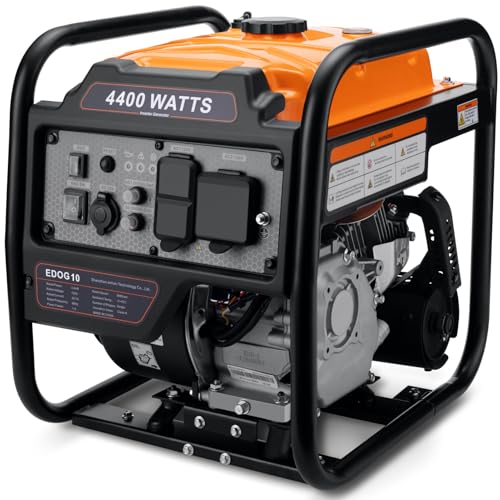
If your needs are more modest, the Oxseryn 4400-Watts Inverter Generator provides 3,400 running watts, which can keep your fridge, lights, and a few devices going. For a quick comparison of different power levels, check out our guide on top inverter generators for home backup and camping.
Fuel Type and Runtime
Inverter generators typically run on gasoline, propane, or both. Dual-fuel and tri-fuel options give you flexibility during emergencies when one fuel type may be scarce. The Westinghouse 8200 Peak Watt Tri-Fuel runs on gas, propane, and natural gas, offering extended runtime and convenience. Meanwhile, the WEN 6800-Watt Dual Fuel RV-Ready Electric Start operates on both gasoline and propane, and its fuel shutoff feature helps preserve the carburetor.
Runtime is another critical factor. A generator that runs for 14 hours at 25% load, like the Oxseryn models, means fewer refueling interruptions during a long outage. For more on dual-fuel options, see our best dual fuel generator picks for reliable home backup.
Noise Level and Portability
Inverter generators are known for being quieter than conventional models, but noise levels still vary. The Westinghouse operates at around 60 dBA at 25% load, which is about the level of a normal conversation. The Oxseryn models keep it under 72 dBA from 23 feet away, making them suitable for camping and residential use.
Portability is also key, especially if you need to move the generator from your garage to the backyard. The Oxseryn 4400-Watts Inverter Generator weighs just 56 pounds, while the WEN comes with wheels and a telescoping handle for easy transport.
Safety Features and Electronics Protection
Safety is non-negotiable. Look for features like low-oil shutdown, CO sensors, and circuit protection. The Westinghouse has an automatic low oil shutdown and a carbon monoxide sensor, while the WEN includes the Watchdog CO Shutdown Sensor. Additionally, inverter technology delivers clean power with low total harmonic distortion (THD), ensuring your laptops, TVs, and other sensitive electronics are safe. For whole-house solutions, you might also explore top whole house generators for reliable home backup power.
Final Thoughts
After reviewing these top models, our overall recommendation for most homeowners is the Westinghouse 8200 Peak Watt Tri-Fuel, thanks to its high power output, tri-fuel flexibility, and transfer switch readiness, making it a true home backup workhorse. For those on a budget or with lighter power needs, the Oxseryn 4400-Watts Inverter Generator offers excellent value, portability, and enough juice to keep your essentials running during an outage. Whatever you choose, you’ll have peace of mind knowing you’re prepared for the next blackout.
Frequently Asked Questions
What size inverter generator do I need for home backup?
For basic home backup, you’ll need at least 3,000 to 5,000 running watts to power your refrigerator, lights, and a few outlets. If you want to run larger appliances like an air conditioner or a sump pump, you’ll need a generator with 5,000 to 7,000 running watts, such as the Westinghouse 8200 Peak Watt Tri-Fuel.
Are inverter generators safe for sensitive electronics?
Yes, inverter generators produce clean power with less than 3% total harmonic distortion, making them safe for laptops, smartphones, TVs, and other sensitive electronics. This is a major advantage over conventional generators, which can cause damage to delicate devices.
Can I use an inverter generator to power my whole house?
Some inverter generators, like the Westinghouse 8200, are transfer switch ready and can power essential circuits in your home. For whole-house coverage, you may need a larger standby generator. Check out our guide on whole house generators for more information.
How long can an inverter generator run continuously?
Runtime depends on the load and fuel capacity. Most inverter generators run between 8 to 14 hours at 25% load on a full tank. For example, the Oxseryn 4400-Watts Inverter Generator runs up to 14 hours at 25% load, while the Westinghouse 8200 offers up to 17 hours on a 3.9-gallon tank.