

Imagine a sudden storm knocks out your power for hours. Your fridge full of food, your Wi-Fi router, and maybe even a medical device like a CPAP machine all depend on electricity. A portable power station for home backup can be your lifeline, keeping critical devices running until the grid is restored. This guide reviews five of the best models on the market, from compact units for short outages to high-capacity stations that power multiple appliances. Whether you need a lightweight solution for occasional blackouts or a robust system for extended emergencies, we have you covered. For a broader look at options, check out our full guide on portable power stations for camping and home backup.



Buying Guide
Capacity and Power Output
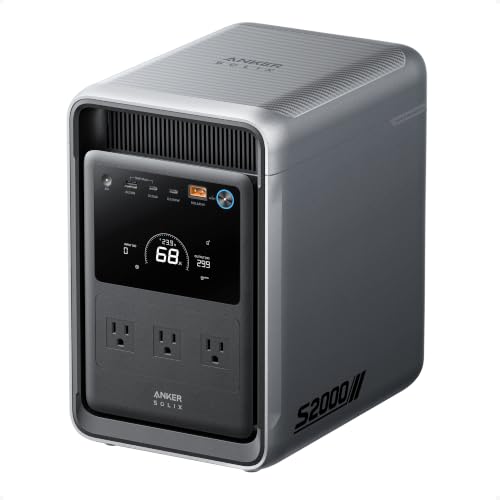
The two most critical specs are watt-hours (Wh) and watts (W). Watt-hours tell you how much energy the station can store, while watts indicate how much power it can deliver at once. For home backup, consider what you need to run. A small unit like the ALLWEI Portable Power Station 300W with 256Wh can power a laptop, phone, and a light for a few hours. For a fridge or a CPAP machine, aim for at least 500Wh to 1000Wh. Larger stations like the BLUETTI Elite 100 V2 with 1024Wh or the Jackery Explorer 1000 v2 with 1070Wh can handle multiple appliances during an outage. If you need to run heavy equipment or for extended periods, look for 1500Wh or more. Our review of the Anker SOLIX S2000 shows how a 2010Wh unit can keep a fridge running for 35 hours.
Battery Chemistry and Lifespan
Most modern portable power stations use lithium-ion or lithium iron phosphate (LiFePO4) batteries. LiFePO4 is the safer, longer-lasting choice. It offers thousands of charge cycles (often 3000 to 4000) before capacity drops to 80%, meaning it can last over a decade with regular use. For example, the ALLWEI Portable Power Station 300W is rated for 3000 cycles, while the Jackery Explorer 300 and BLUETTI Elite 100 V2 offer over 4000 cycles. The Anker SOLIX S2000 goes even further with 10,000 cycles thanks to its advanced LFP cells. If you plan to use your power station frequently or keep it for years, investing in LiFePO4 technology is wise. It also handles higher temperatures better and is less prone to thermal runaway.
Recharging Options and Speed
How quickly you can recharge your power station matters, especially during a prolonged blackout. Look for models that support AC wall charging, car charging, and solar panel input. Fast charging can turn a multi-hour wait into a quick top-up. The Jackery Explorer 1000 v2 can charge from 0% to 100% in just one hour using its emergency mode via the app. The BLUETTI Elite 100 V2 reaches 80% in about 45 minutes with its 1200W fast charging. For off-grid use, solar compatibility is key. Most units include an MPPT charge controller for efficient solar harvesting. The ALLWEI Portable Power Station 300W supports dual charging (AC + solar) to recharge in just 2 to 2.5 hours. For more on solar options, visit our best solar generators.
Portability and Form Factor
Home backup doesn’t always mean stationary. You may need to move the unit from room to room or take it on a camping trip. Weight and size vary widely. The ALLWEI Portable Power Station 300W weighs just 6.4 pounds and fits in a backpack, perfect for quick grabs. The Jackery Explorer 300 is 7.5 pounds and similarly compact. Mid-range units like the Jackery Explorer 1000 v2 (23.8 pounds) and BLUETTI Elite 100 V2 (25 pounds) are still manageable with handles. The Anker SOLIX S2000 is the largest at 35.7 pounds but is 30% smaller and 25% lighter than competing 2kWh stations. Consider where you’ll store it and how often you’ll move it. If you plan to use it both at home and outdoors, a lighter model with a handle is ideal. Check our power stations category for more options.
Final Thoughts
Choosing the best portable power station for home backup depends on your specific needs: for light, short-term outages where portability is key, the compact ALLWEI Portable Power Station 300W offers a budget-friendly and lightweight solution with reliable LiFePO4 battery life, while for larger homes or extended blackouts requiring substantial power for fridges, medical devices, and multiple electronics, the high-capacity Anker SOLIX S2000 Portable Power Station, 2,010Wh provides exceptional runtime and ultra-fast recharging, ensuring you stay powered through any emergency.
Frequently Asked Questions
How long can a portable power station run a refrigerator during a power outage?
Runtime depends on the fridge’s power consumption and the station’s capacity. A typical mini-fridge uses about 100Wh per day, so a 1000Wh station could run it for roughly 10 hours. Larger fridges may only last a few hours. For example, the Anker SOLIX S2000 is rated to run a standard fridge for up to 35 hours. Always check the wattage of your appliance and the station’s capacity before relying on it.
Can I use a portable power station indoors safely?
Yes, portable power stations with LiFePO4 or lithium-ion batteries produce no fumes, are silent, and are safe for indoor use. They do not emit carbon monoxide like gas generators. However, keep them away from water and ensure proper ventilation to avoid overheating. Most models have built-in BMS protection for added safety.
What is the difference between a power station and a solar generator?
A power station stores electricity and provides AC/DC outlets. A solar generator is a power station paired with solar panels that can recharge from sunlight. Many power stations are sold as standalone units, but they can be used with solar panels to become solar generators. For a deeper dive, see our solar generators guide.
How do I maintain a portable power station for long-term home backup use?
To maximize lifespan, store the station in a cool, dry place (ideally between 32°F and 104°F). Keep it partially charged (around 50-80%) if not using it for months. Perform a full discharge and recharge every 3-6 months to maintain battery health. Avoid exposing it to extreme temperatures or direct sunlight for long periods.


