

When the power goes out, a solar generator can keep your fridge running, your lights on, and your phone charged. Whether you’re facing a seasonal storm or just want peace of mind, the right home backup system makes all the difference. In this guide, we review the top solar generators for home backup in 2026, focusing on reliable models from Jackery and Anker that balance capacity, portability, and performance.
We have personally evaluated these power stations based on real-world needs like running essential appliances, ease of setup, and long-term durability. If you are new to solar generators, our best solar generators provides a broader overview of top picks for camping and home backup.



Buying Guide
Battery Capacity and Chemistry
The capacity, measured in watt-hours (Wh), determines how long your devices will run. For home backup, look for at least 1,000Wh to power a fridge and lights for several hours. LiFePO4 (LFP) batteries are now the standard, offering over 4,000 charge cycles and a lifespan of 10 years or more. Both Jackery and Anker use LFP cells in their latest models, ensuring you get reliable power for years.
If you need to run heavy appliances like a sump pump or a window AC unit, consider a unit with 2,000Wh or more. The best portable power station for home backup often pairs high capacity with a robust inverter to handle startup surges.
Inverter Output and Surge Capacity
The inverter’s continuous output (in watts) determines which devices you can run simultaneously. A 1,500W inverter can power a refrigerator, a few lights, and a laptop, but a 2,200W or 3,600W unit can handle a microwave, a space heater, or a well pump. Surge capacity is equally critical—many appliances draw 2x to 3x their running wattage at startup. Look for a surge rating that exceeds your largest appliance’s starting draw.
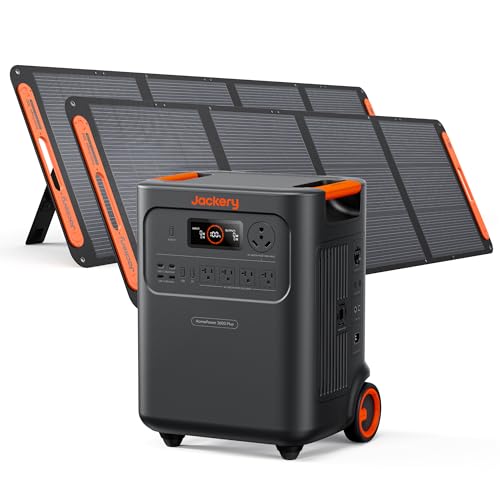
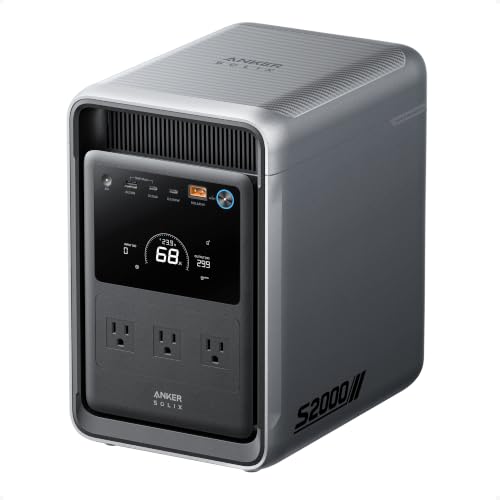
For whole-home backup, the Jackery HomePower series offers 3,600W continuous output and 7,200W surge, which can power most household circuits. For smaller setups, the Anker SOLIX S2000 with 1,500W continuous and 3,000W surge is a solid choice for essential circuits.
Recharging Options and Speed
A good home backup generator should recharge quickly from multiple sources. Solar input is essential for off-grid use, but AC wall charging is faster for daily top-ups. Some models, like the Jackery Explorer 1000 v2, can charge from 0% to 100% in just one hour using the emergency charging mode via the app. Others support hybrid AC+DC charging to cut recharge times in half.
If you plan to rely on solar panels, check the maximum solar input wattage. Most units accept 200W to 400W of solar panels, which can fully recharge a 2kWh battery in 4 to 8 hours of good sunlight. For a deeper dive, see our Anker SOLIX S2000 review for a detailed look at recharging performance.
Portability and Weight
Home backup units don’t need to be as portable as camping gear, but you may need to move them from the garage to the living room during an outage. Look for models with wheels and telescopic handles if you choose a large unit like the Jackery HomePower 3600 Plus (which weighs under 60 lbs). Smaller units like the Jackery Explorer 300 (7.5 lbs) are easy to carry but have limited capacity—ideal for powering a CPAP machine or a few lights.
For most homeowners, a mid-range unit like the Jackery Explorer 2000 v2 (39.5 lbs) strikes a good balance: enough capacity for a full day of backup but still manageable to move around. If you need a lightweight option for both home and camping, the Anker SOLIX S2000 (35.7 lbs) is a strong contender.
Final Thoughts
Choosing the best solar generator for home backup comes down to your specific power needs and budget. For most households, the Jackery Explorer 2000 v2 and 2x200W Solar Panels offers a versatile balance of capacity, fast recharging, and portability, making it ideal for powering a fridge, lights, and electronics during an outage. If you need heavy-duty backup for a larger home or want to run appliances like a well pump or window AC, the Jackery HomePower 3600 Plus & 2x200W Solar Panels delivers the highest output and expandable capacity, ensuring you stay powered through extended blackouts.
Frequently Asked Questions
How long will a solar generator power my home during an outage?
This depends on the generator’s capacity and what you plug in. A 2,000Wh unit can run a refrigerator (approx. 150W) for about 13 hours, or a few lights and a laptop for several days. For a full home backup, consider a 3,000Wh+ model like the Jackery HomePower 3000, which can power essential circuits for up to 15 hours. Always check the wattage of your devices and the generator’s runtime estimates for 2026 models.
Can I use a solar generator indoors?
Yes, solar generators produce no fumes or carbon monoxide, so they are safe for indoor use. However, the solar panels must be placed outdoors in direct sunlight. Many modern units, like the Jackery Explorer 2000 v2, have quiet operation (as low as 30 dB in silent mode) and are designed for indoor use during blackouts. For more details, see our home backup batteries category.
How do I maintain a solar generator for long-term reliability?
LiFePO4 batteries require minimal maintenance. Store the unit in a cool, dry place between 32°F and 104°F. To preserve battery health, avoid letting it discharge below 10% and recharge it every 3 to 6 months if not in use. Most Jackery and Anker models include smart app controls to monitor battery health and schedule charging cycles.
What appliances can I run with a 1,500W solar generator?
A 1,500W inverter can power a refrigerator (600-800W startup), a few LED lights (10-20W each), a laptop (50W), and a phone charger (10W) simultaneously. It can also run a microwave (1,000W) or a space heater (1,500W) but not both at once. For larger appliances like a well pump or central AC, you’ll need a unit with 3,000W+ output, such as the Jackery HomePower series.
For a full list of compatible devices, check the manufacturer’s specifications and our solar generators category page for 2026 recommendations.



